
Étretat with friends: a weekend in 4 stops
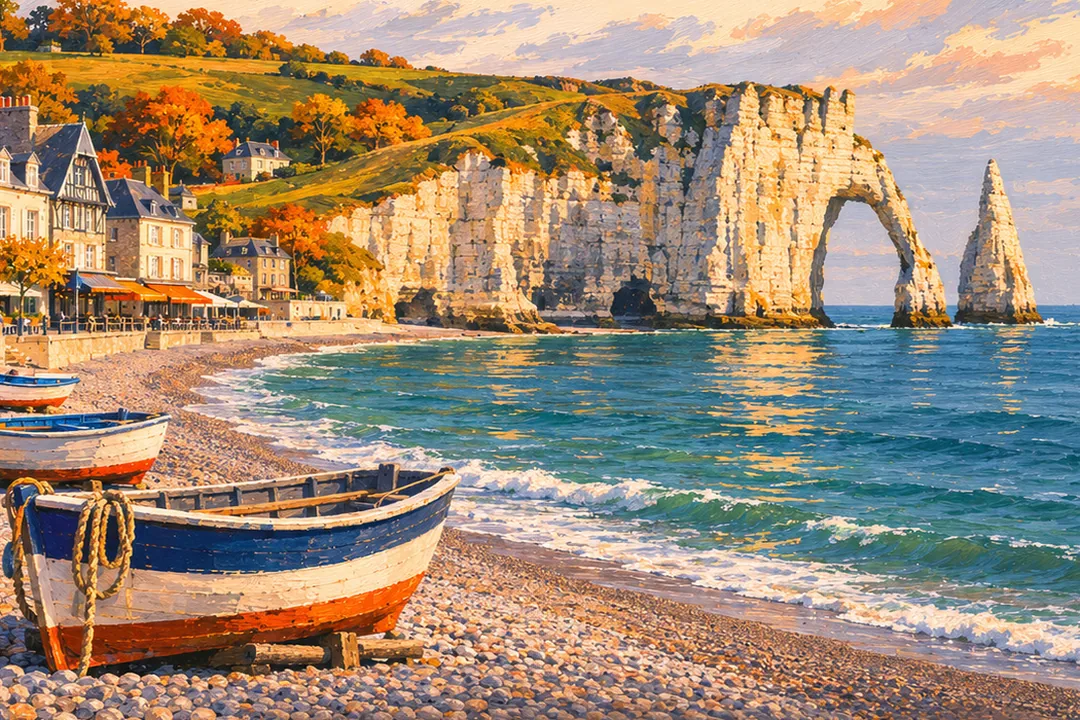
The arch and the Needle, the Falaise d’Amont, the market hall and the beach: four stops for an outdoor weekend in Étretat, as a group and safely.
What this article covers
- Why Étretat for a group weekend
- Stop 1: the arch and the Needle, the silhouette that makes you look up
- Stop 2: the Falaise d'Amont, the chapel, the sea, the horizon
Étretat is all about fresh air to share: chalk cliffs, a pebble beach facing the English Channel and a village you can cross on foot in a few minutes. To follow our illustrated postcard series, four stops are enough for a weekend with the people you love: the arch and the Needle, the Falaise d'Amont, the market hall and the beach. Just one rule before you go: check the tide times.
Why Étretat for a group weekend
Étretat is lived outdoors, which makes it an ideal group destination: the cliff paths, the seafront promenade and the beach all start from the village centre. The walkers in the group climb the cliffs, the others stay on the promenade, and everyone meets up for lunch. The cliffs and their arches have inspired painters, starting with Claude Monet, who painted them many times in the 1880s, and the writer Maurice Leblanc, who used them as the setting for The Hollow Needle.
Stop 1: the arch and the Needle, the silhouette that makes you look up
West of the beach, the Falaise d'Aval forms Étretat's most famous view: the Porte d'Aval, an arch carved into the chalk, and the Aiguille (the Needle), a spire about fifty metres high rising from the sea. A path climbs from the end of the promenade to the top of the cliff; further on, the Manneporte, the largest of the arches, can be seen from above.
At the top there is no continuous railing: stay on the marked paths and well away from the edge. The town has installed posts and wires on the most sensitive sections of the Falaise d'Aval, and signs remind walkers not to approach the drop, as explained by the French Hiking Federation (in French).
Stop 2: the Falaise d'Amont, the chapel, the sea, the horizon
On the other side of the beach, the Falaise d'Amont offers the reverse view: the whole village, the beach and the Falaise d'Aval opposite. At the top stands the Notre-Dame-de-la-Garde chapel, dedicated to sailors and rebuilt after the Second World War. Right next to it, a monument commemorates Nungesser and Coli, the two pilots of the Oiseau Blanc who disappeared in 1927 while attempting to fly across the Atlantic, last seen over the Normandy coast. The site, owned by the Conservatoire du littoral, is described by Seine-Maritime Tourisme.
The climb by the stairs and path is short but steep: allow about twenty minutes at a gentle pace. It is the perfect late-afternoon walk, when the low light falls across the Falaise d'Aval.
Stop 3: the market hall, a detour through the heart of the village
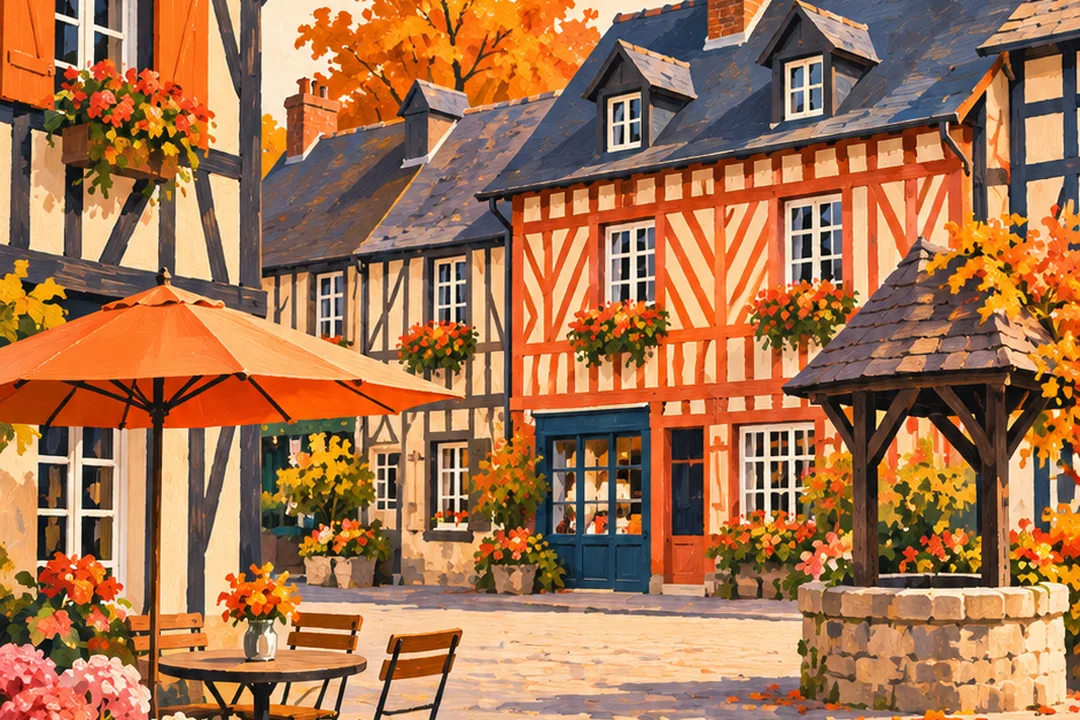
Between two walks, the heart of the village is the Place du Maréchal-Foch and its market hall: a wooden covered market built in 1926 in a traditional Normandy style, now home to craftspeople, designers and shops. The tourist office website lists them.
This is the stop for postcards (the real ones), a coffee on a terrace and the short break every group needs. The surrounding streets, with their half-timbered houses and early 20th-century villas, are best explored without a map.
Stop 4: the beach, a break facing the Channel
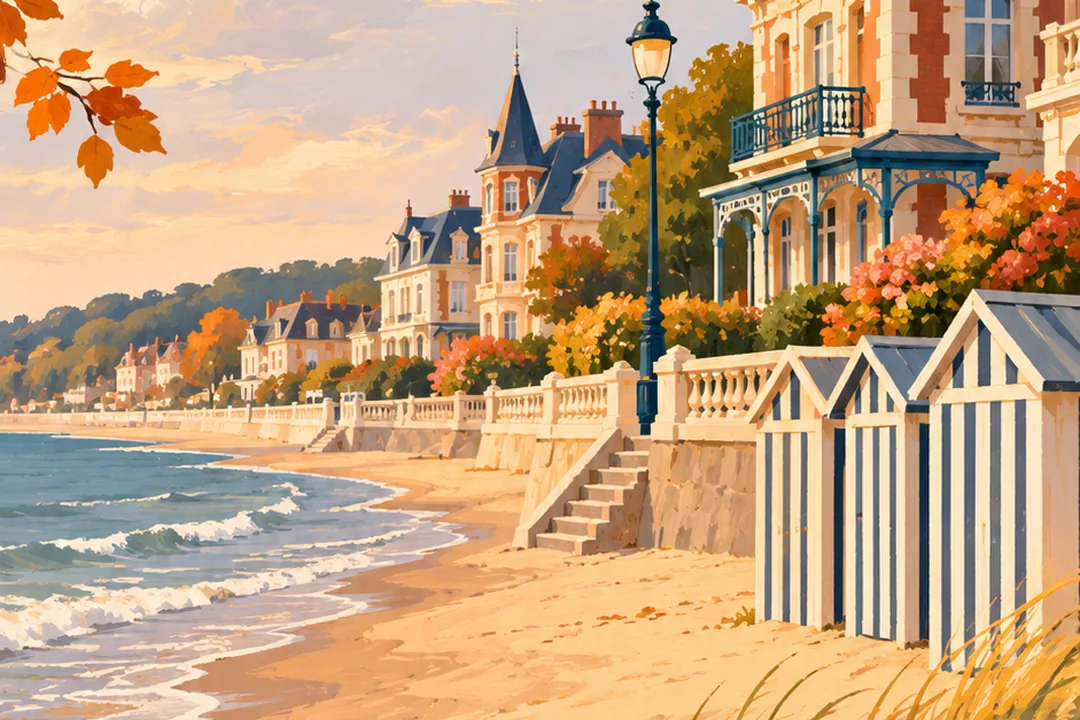
Étretat's beach is a pebble beach framed by the two cliffs. No towel on the sand here: bring a thick blanket or a folding chair, and shoes suitable for walking on pebbles. It is the place to look at the sea, listen to the waves and let time pass.
At the foot of the cliffs, the tide is in charge. Some passages, such as the Trou à l'Homme tunnel, can be cut off by the rising tide, and walkers regularly find themselves stranded there. Check the tide times on the SHOM website (the French hydrographic service) before going down, leave plenty of margin to come back, and keep away from the foot of the cliffs, which is exposed to rockfalls, as the Le Havre Seine Métropole safety guidelines (in French) point out. Some sections may also be temporarily closed by municipal order: follow the signs on site.
When to go to Étretat
Our postcard chose autumn, and the season suits it: the light on the chalk is beautiful, the paths are quieter than in summer and the village slows down. Spring is just as pleasant. In summer and on sunny weekends, Étretat draws large crowds: set off early and favour public transport or car parks away from the centre. Whatever the season, bring warm, windproof clothes: the wind blows hard at the top of the cliffs.
Getting to Étretat without hassle
- By car: from Paris, the Le Havre Étretat tourist office recommends the A13 (about 2 h 45), then the A131 and the Tancarville bridge exit, and finally the D39.
- By train, then coach: from Paris Saint-Lazare, trains run to Le Havre or Bréauté-Beuzeville. Coaches then serve Étretat, notably line 504 from Bréauté, LiA lines 13 and 21 and Nomad line 509 from Le Havre. Lines and timetables change: check them before leaving, for instance in the town's access guide (in French).
- From Honfleur: allow about 45 km and 40 to 50 minutes by road, via the Pont de Normandie, which is a toll bridge.
A typical weekend in four stops
Saturday
Arrive late morning, have lunch in the village, then walk up the Falaise d'Aval to the viewpoint over the Needle. At the end of the day, climb the Falaise d'Amont to the chapel for the evening light.
Sunday
Spend the morning around the market hall and the village streets. After lunch, take a break on the beach, having checked the tide times, before heading home. If the group has an extra day, Honfleur and its Vieux Bassin are less than an hour away: that is the subject of our weekend in Honfleur in 4 stops.
Staying with loved ones rather than in a hotel
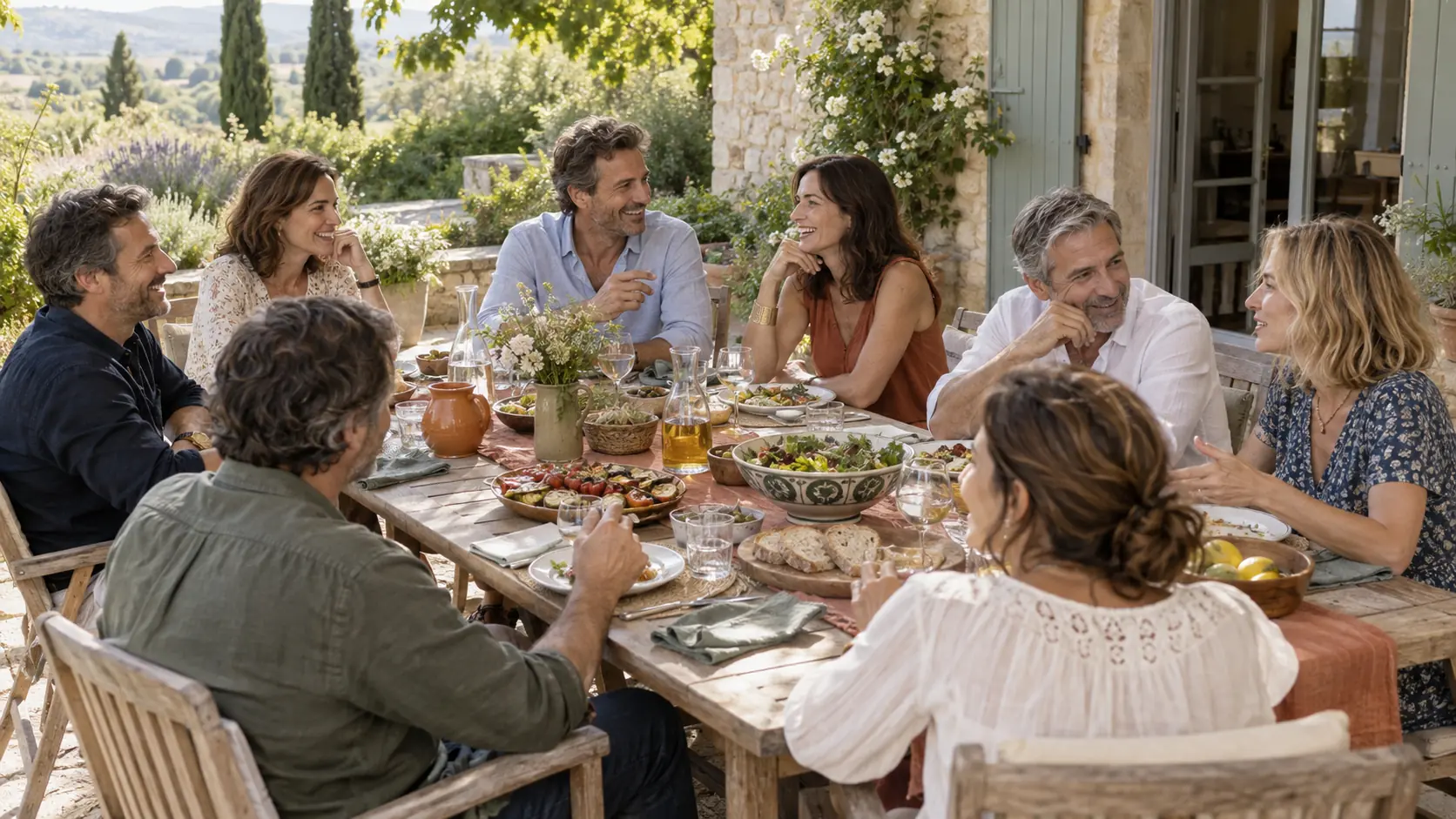
After a day outdoors, the nicest option is often to gather in one house. If someone close to you owns a home on the Normandy coast, KazaKlub helps organise that stay within a private circle: the owner shares their Kaza with the members of their Klub, sets their availability and accepts or declines each request. KazaKlub does not guarantee that a home will be free on the dates you want: everything is decided between you.
If the group does not all arrive at the same time, here is how to handle staggered arrivals and departures. To organise meals, read how to share groceries and meals without keeping score and, above all, the rules to agree on when lending a home to loved ones.
Who are you going with?
This is the last card in our series: save the idea and share it with the people you love. Your circle, your Kazas, your getaways. To create your Klub and invite them, create your KazaKlub account and see how it works.
Frequently asked questions
Can you walk to the Needle of Étretat?
No: the Needle rises from the sea. You admire it from the beach or from the top of the Falaise d'Aval, reached by a path starting at the end of the promenade.
Do you need to check the tides to visit Étretat?
Yes, as soon as you go down to the beach or the foot of the cliffs. Some passages are cut off by the rising tide: check the official SHOM tide times and always leave yourself time to come back.
Can you visit Étretat without a car?
Yes: the village and the cliffs are explored on foot. To get there, take the train to Le Havre or Bréauté-Beuzeville, then a coach. Check timetables before leaving, especially on Sundays and off-season.
Is it possible to do Étretat and Honfleur in the same weekend?
Yes, the two towns are about 45 km apart. To enjoy them without rushing, plan a day for each.
Your next stay starts with your circle.
Create your account, bring your friends and family together and prepare your first request.
Every stay requires the host’s agreement.